Last week was the first time that I set foot in Central Texas, flying into Austin for archival research at several depositories in Austin and Waco. I spent two afternoons at the Briscoe Center for American History, and had a chance to visit the museum at the LBJ Presidential Library right next door.
Continue reading “Two surprises during a visit of the LBJ Library”That is, in Western-style music and not traditional music. There are many tragic stories in cải lương. For example, Chuyện Tình Lan và Điệp has been compared to the story of Shakespeare. Truth be told, I’ve never found the romance of Lan and Điệp to be like Romeo and Juliet at all (and vice versa), but it’s another discussion for another time.
Continue reading “The most Romeo-and-Juliet song in Vietnamese music”I ended my last post stating that the album Tiếng Hát Chế Linh 1 (1972) is a masterpiece of Vietnamese bolero. Not only there isn’t a single bad song, but also outstanding are at least three-quarters of the songs, including all six that Chế Linh wrote or co-wrote under the name Tú Nhi. Let me tackle one more tune from this album, partially because of the song itself and partially because of a recording by Trường Vũ that may have surpassed Chế Linh’s original recording.
Continue reading “Vietnamese bolero and the pain of love: Đoạn tái bút”

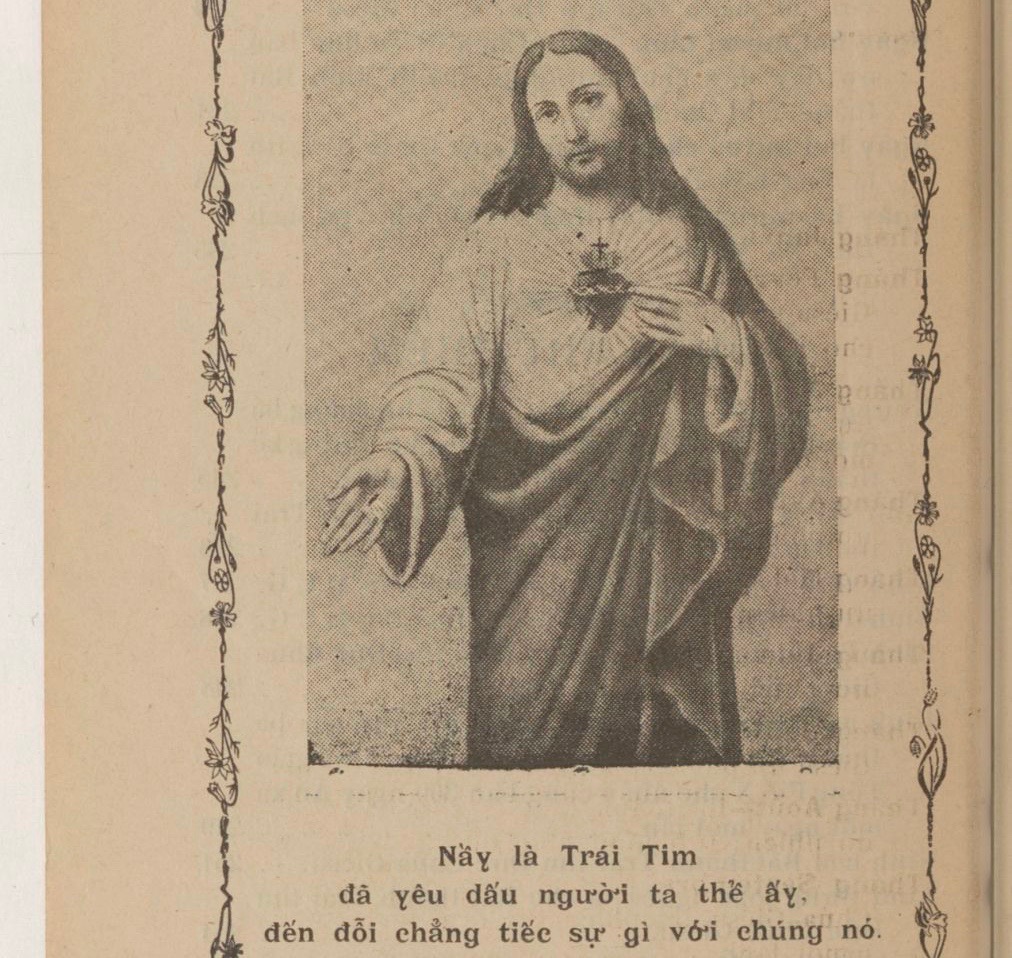
Continue reading “Vietnamese nationalism in a popular hymn about the Sacred Heart of Jesus”
I’d written a post about Năm Xưa Trên Cây Sồi [Years Ago on an Oak Tree], which has been, in my opinion, the most popular devotional Marian hymn in Vietnamese. This post is about a different hymn that happens to be about Our Lady of Fatima as well. Continue reading “Marian reparation in a Vietnamese hymn”
This week marks the fiftieth anniversary of the Tet Offensive. The event has generated perhaps more publications in the English language – government reports, media accounts, academic studies, amateur histories, memoirs, etc. – than any other from the Vietnam War. A sucker for anniversaries of publications and releases of films and music, I wish to commemorate it by inviting non-Vietnamese to listen to a very well-known song among Vietnamese.
Continue reading “Bài ca dành cho những xác người: Song for the human corpses”


You must be logged in to post a comment.