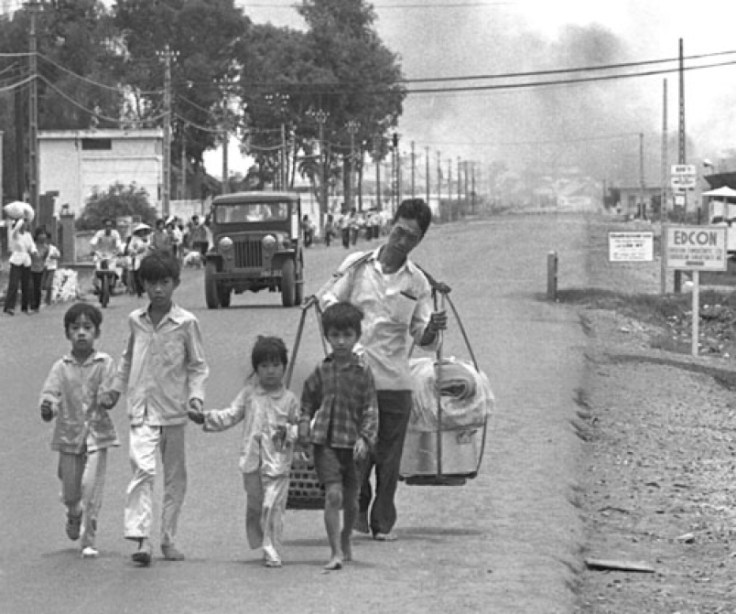
Grading and other obligations kept me from watching this documentary when it was first shown on PBS last week. But I read the written narrative on the ProPublica website (which isn’t a transcript of the documentary but shares the same materials), and finally watched the documentary online last night. Here are some thoughts after watching it.
Continue reading “Initial thoughts on “Terror in Little Saigon””
On the second day of his visit to the U.S., Pope Francis stopped his motorcade and picked up a five-year-old Mexican American girl who tried to give him a letter and T-shirt. Seeing it in evening news reminded me of another pontiff that visited a refugee camp and picked up a little girl from the ground. It was John Paul II at the Phanat Nikhom Refugee Camp during his papal visit to Thailand in May 1984.
At the time, Phanat Nikhom held thousands of refugees from Cambodia, Laos, and Vietnam. Among the Vietnamese were “boat people” as well as “land refugees,” that is, they left over land rather than sea. International and media focus on post-1975 Vietnamese refugees was typically on the “boat people.” But there were many that left by other means, including crossing through the land mass of southern Vietnam and Cambodia to reach the borders of Thailand.

Bài lời Việt theo sau bài tiếng Anh. Hai bài hao hao nội dung nhưng không giống hẳn. The Vietnamese portion follows the English. I cater each language to different readers and they aren’t entirely the same.
April 30 was of course the climax of the fortieth anniversary of the end of the Vietnam War and the beginning of mass Vietnamese migration to the U.S. But there’s still a lot of the anniversary year left.

Tomorrow is the first day of classes at my institution, and I will continue to honor this anniversary by posting about Vietnamese music related to war and refugees throughout the fall semester and into the spring semester.
What did the first waves of Vietnamese refugees in America think about themselves? What was their mindset regarding their place in the world? Is it possible to write a coherent literary history of their experience?

The search for answers can take different directions and have different starting points. In my opinion, it isn’t a bad idea to begin with a collection of poetry, essays, memoirs, and fiction entitled Tuyển Tập Thơ Văn 90 Tác Giả Việt Nam Hải Ngoại 1975-1981: Selected Poetry and Prose from Ninety Vietnamese Writers Abroad, 1975-1981 (Missouri City, TX: Văn Hữu, 1982). KEEP READING!
Posted on VSG on April 14, 2015
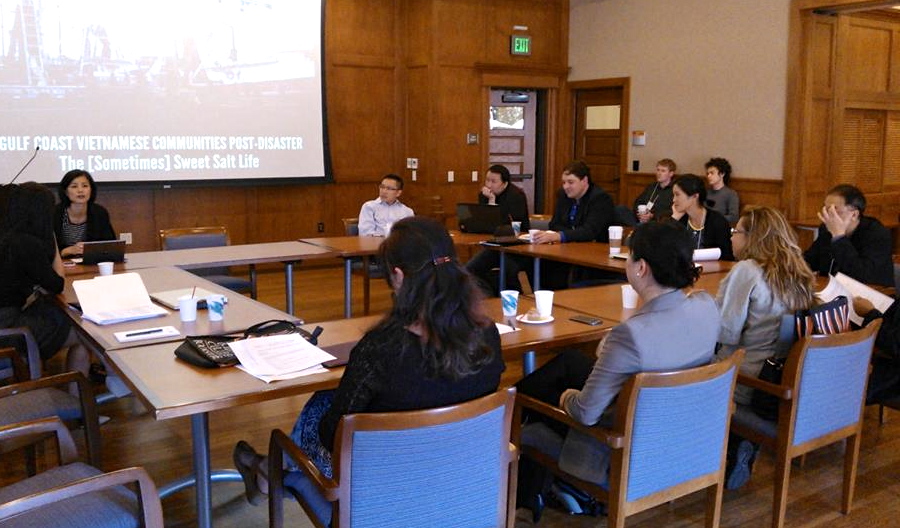 Conference report: “Vietnamese in America Since 1975: History, Identity, and Community,” Occidental College, April 11, 2015
On this day, a dozen of scholars in history, religion, and the social sciences gathered at Occidental College for meals and conversations. KEEP READING!
 tuannyriver
You must be logged in to post a comment.