Last week was the first time that I set foot in Central Texas, flying into Austin for archival research at several depositories in Austin and Waco. I spent two afternoons at the Briscoe Center for American History, and had a chance to visit the museum at the LBJ Presidential Library right next door.

It was one week after the flooding just one county to the west that tragically killed dozens of camp children along with many more adults. The state flag was half-staff to honor the victims. The US flag wasn’t half-staff because the library is property of the federal government, not the State of Texas.
The largely windowless building looked imposing from the outside. I want to say that it is as different from the Clinton Library in Little Rock that I saw last year, but the design of the Clinton Library is rather unusual that it looks different from any other presidential library.
Expectedly, the Vietnam War and the Great Society dominated the exhibits in the museum. Along the corridor of the galleries on Vietnam, there was even a silky áo dài kept in its own case.

All the same, it was entirely unexpected for me to see a Vietnamese sculpture in the display case of gifts from other governments. This sculpture of a woman playing the traditional music instrument đàn tỳ bà sat between a malachite box gifted by a Soviet chairman of ministers and a bust of a Roman child from an Italian prime minister.
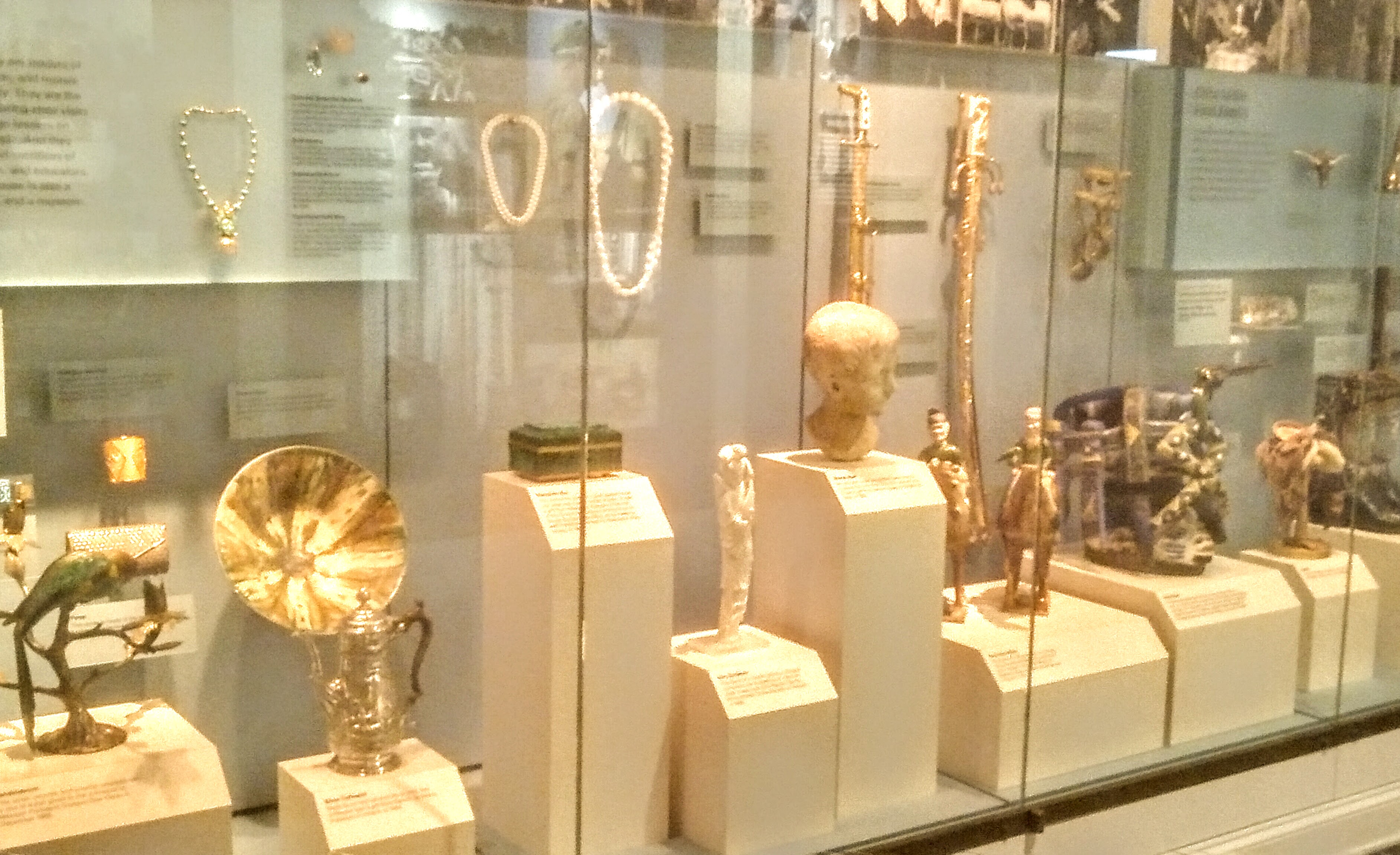
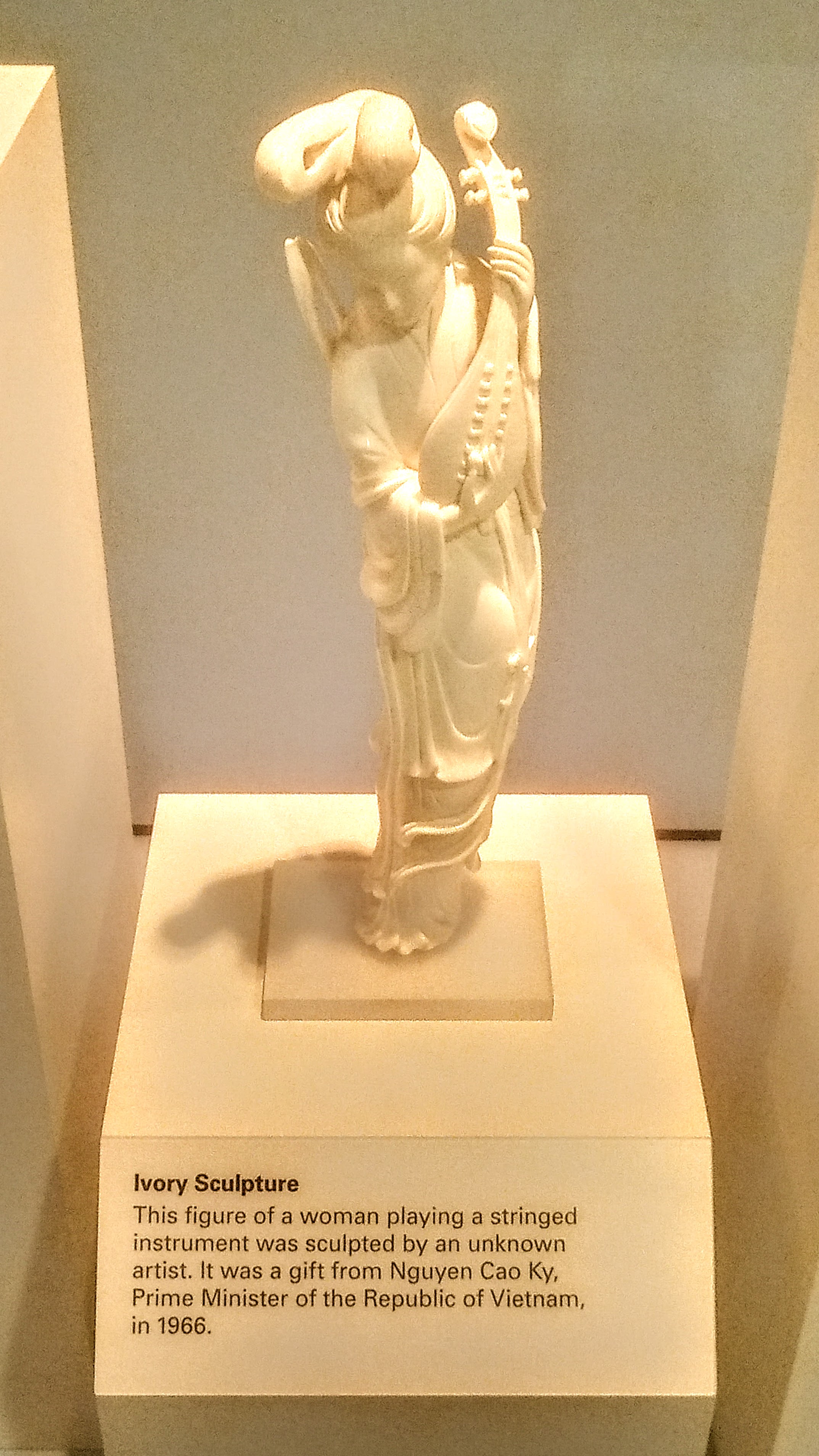
I had no idea why the curators chose this item out of 2000 gifts received during his presidency. Maybe in some kind of a rotation? Anyway, it was a pleasant surprise seeing a Vietnamese artifact not entirely related to warfare in display.
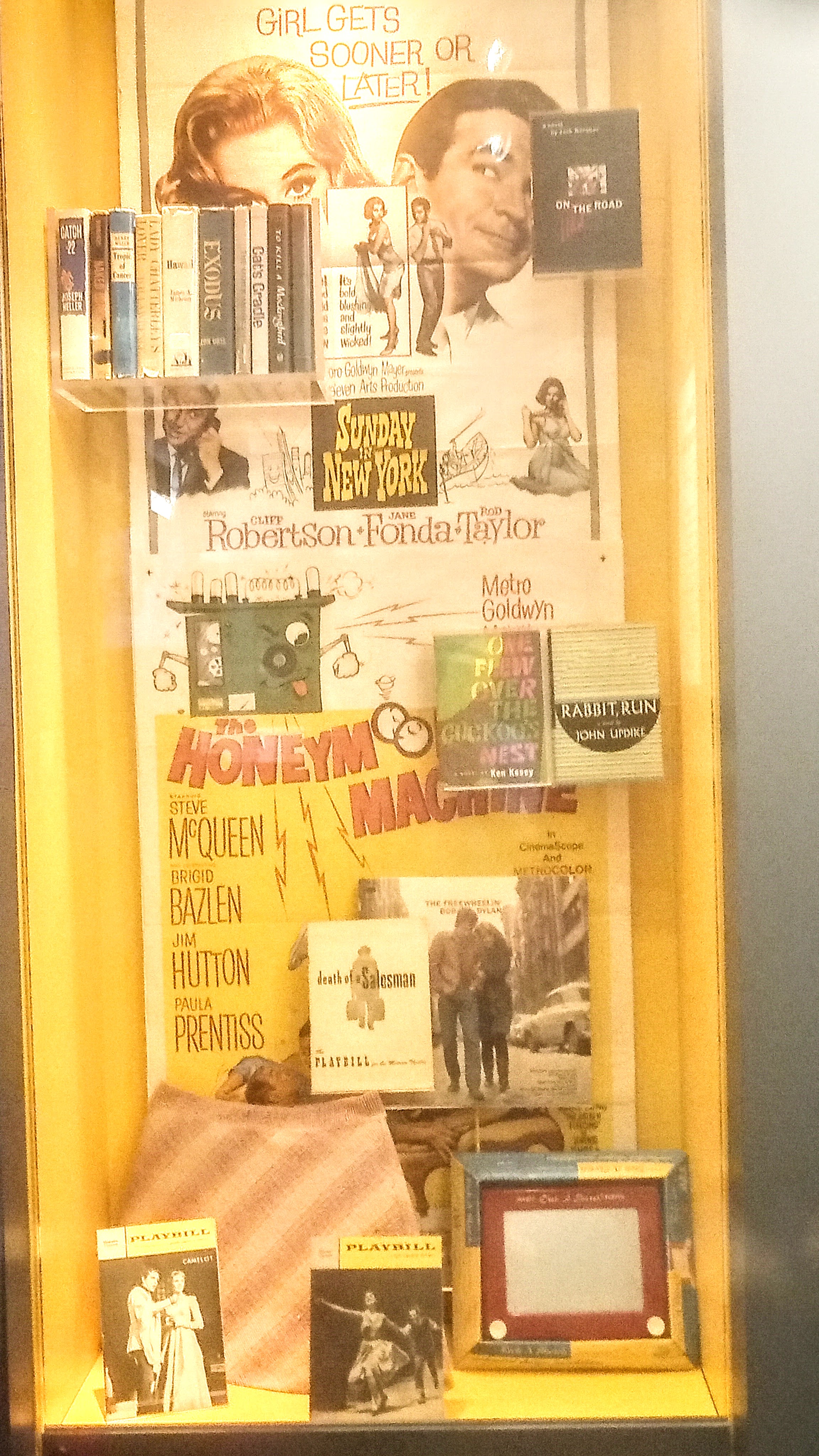
Another surprise was found among the display cases of cultural artifacts in the postwar era. Mostly popular culture plus a few items that could be considered to be “elitist” or high culture. They are sprinkled with a dosage of headlines of major political and diplomatic news.
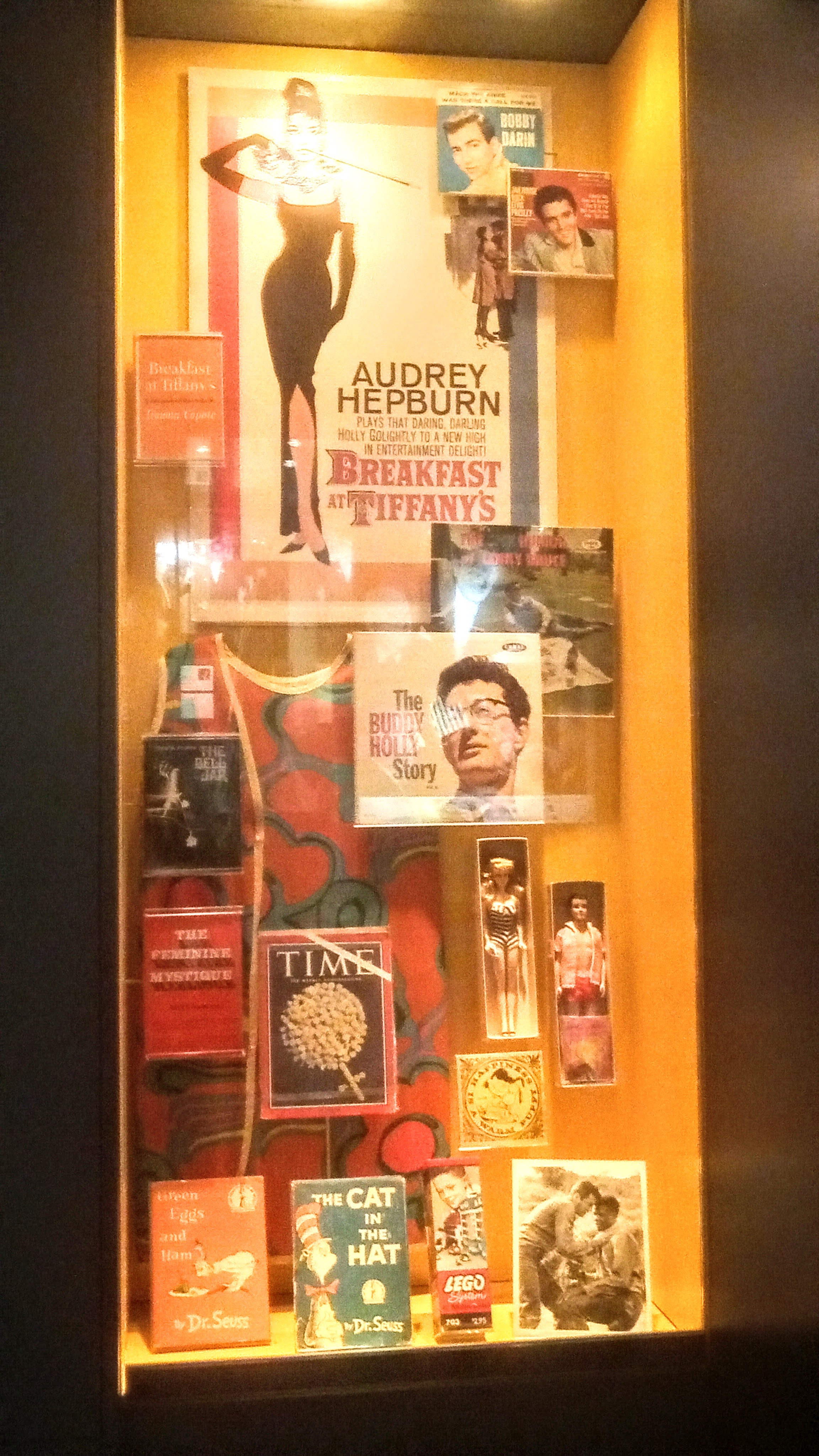
These display cases were organized into three sections, and each section included three glass display cases. One case sat horizontally between two cases that stood vertically.
Here are the three cases in the first section. The earliest artifact is probably The Death of a Salesman (1949). Most of the rest come from the 1950s and the early 1960s.
Sorry for the blurriness in some photos. The museum’s lighting was intentionally low-key, and my cell phone wasn’t the best for taking photos in this environment.
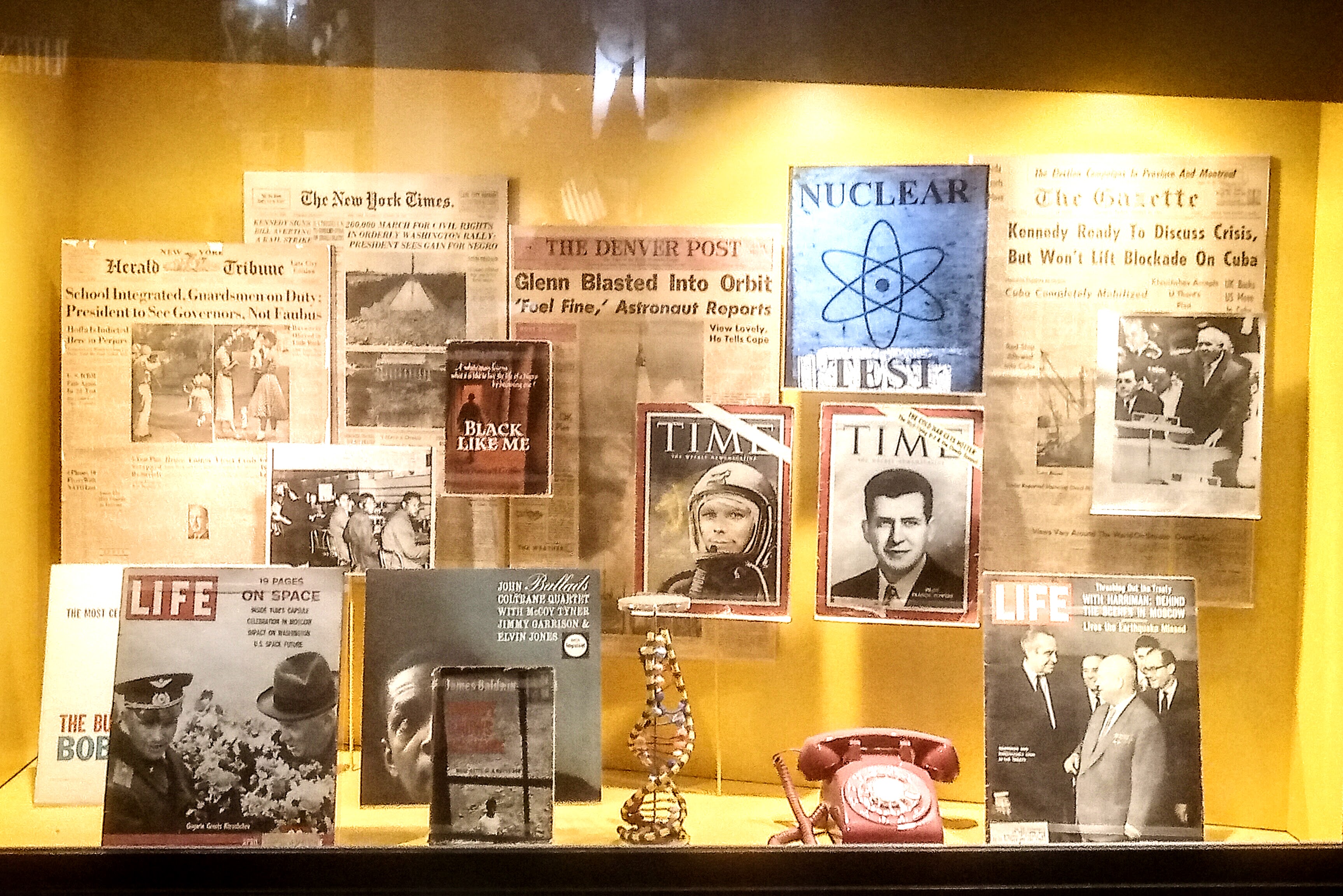
The second section is mostly the mid- and late 1960s. Note that there are fewer books in these display cases, and more music.


The last section is mostly the late 1960s. Note, again, the significance of music, especially rock music.
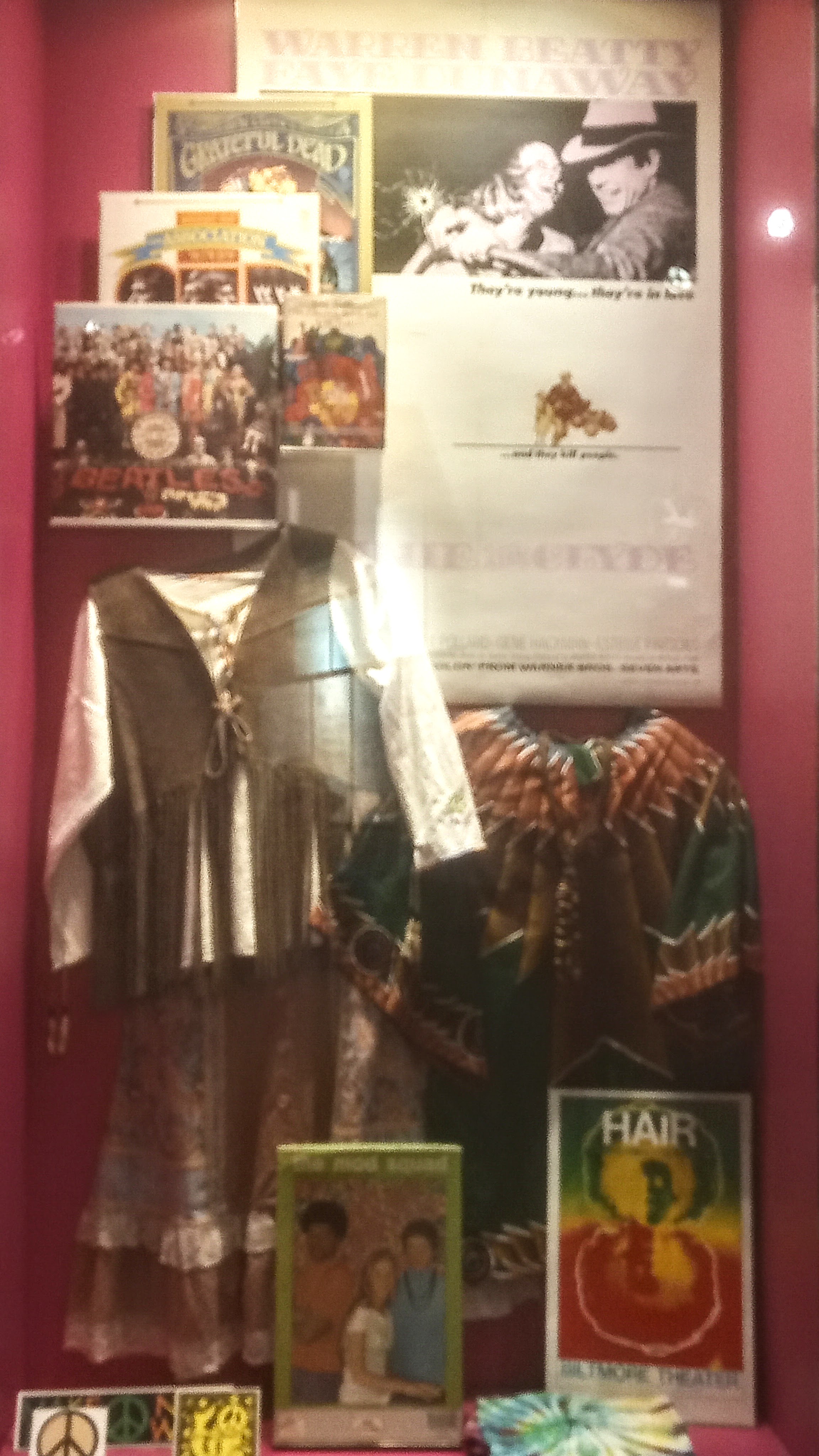

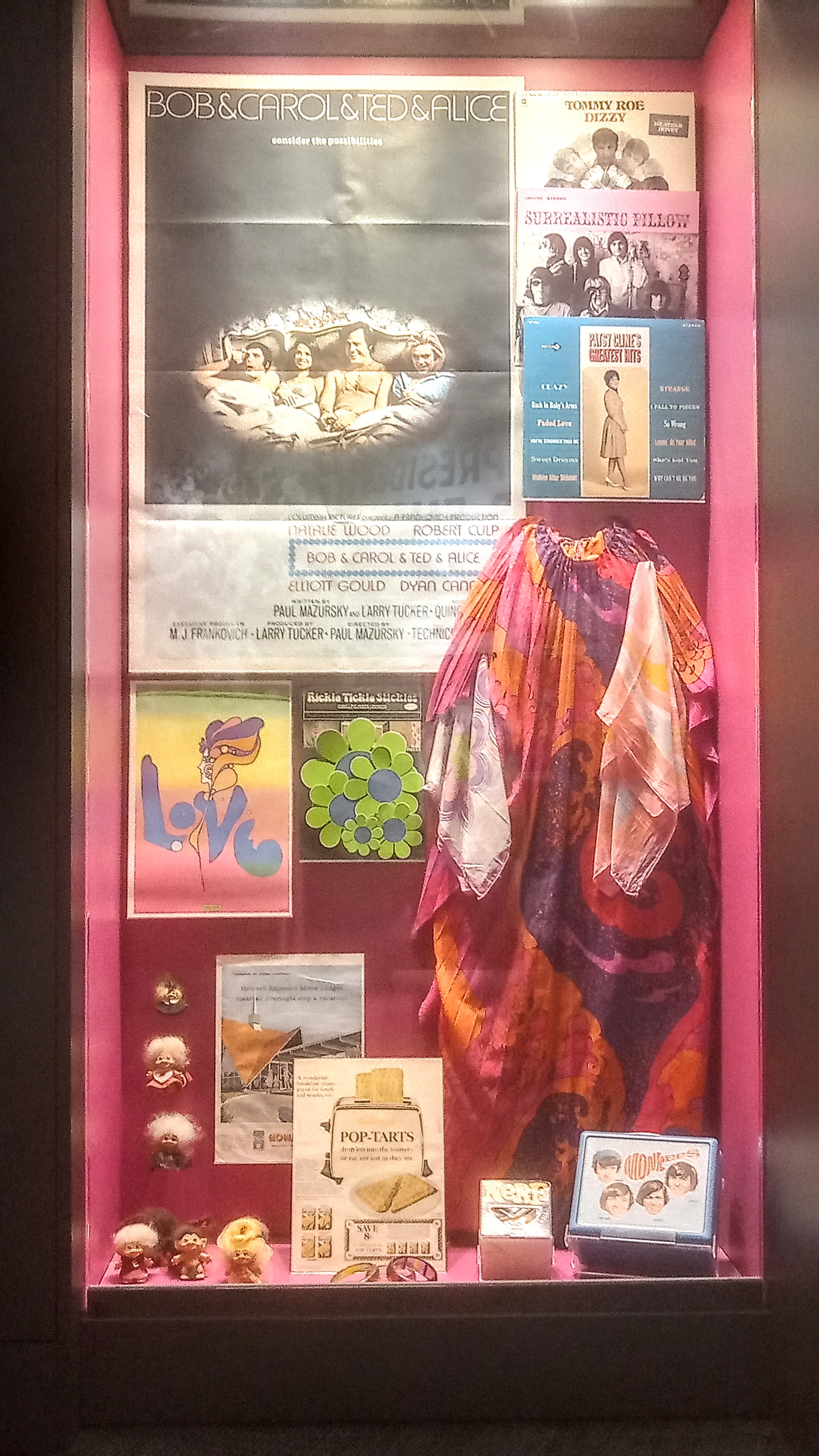
Okay dokay, why was I surprised? It’s the absence of the Beach Boys in the display.
What, no Beach Boys?
I mean: THE BEACH BOYS!!
I’m not even a fan, but weren’t they significant enough in the 1960s?
There are still many fans, including hardcore fans such as my Pepperdine colleague Michael Ditmore, from whom I’ve learned a good deal about Brian Wilson. Indeed, Wilson’s recent death raised my awareness a notch about the place of the Beach Boys in postwar popular culture. They exerted enormous popularity.
Why, then, there’s no representation of this band in any of the display cases. There is probably a certain bias at work here.
That is, an East Coast bias. In particular, New York City is prominent in these cases. Afternoon in New York. Breakfast at Tiffany’s. Broadway’s Playbill. Woody Allen. Truman Capote. And so on.
Or, perhaps the curators considered the Beach Boys conventional and not “rebellious” enough to match most other artifacts. Elvis is acknowledged with a small artifact: a lot smaller-than-he-deserves. But at least there is a representation of his influence.
The Beach Boys weren’t as big as Elvis, but they were big hitmakers during 1962-1966. After their maiden album, all but one of their next ten albums, from Surfin’ USA to Pet Sounds, went gold or platinum. Eight of those ten albums also charted in the top ten. In dollars and cents, their success was nation-wide. Since the 1970s, many of their tunes have been used in movies and television.
I understand that curators have to make hard choices. All the same, it was a surprise to note this lacuna. Don’t you think that the curators at LBJ Library ought to represent Brian Wilson and his gang by adding one of those ten albums to the display?
By the way, here’s a close-up of the books on the very first display case. I’d guess that only Catch-22 and To Kill a Mockingbird are still read by many today.

 tuannyriver
Leave a comment