It’s easy to say that we should elevate the studies of Trịnh Công Sơn (TCS) beyond the hagiographical wave. It’s a lot harder to pinpoint at what or how it should be elevated. I have a couple of suggestions.
First of all, TCS wrote three primary categories of music between the late 1950s and the mid-1970s while living under the Republic of Vietnam. They are distinct categories, and it’s a handful just to focus on one of them. Instead of trying to write about all of his music, I’d suggest to scholars and educated amateurs to choose one category then dig deeply into it.
TCS of course will have written more songs after national unification and under the Socialist Republic of Vietnam. His postwar output is an appropriate subject of inquiry. His peak as a songwriter, however, took place before 1975, and it is the era of my focus below. Besides, it is very demanding to study his music before 1975 and one should devote as much of one’s time as it it possible. There is much less scholarship (and even popular knowledge) about Vietnamese intellect and culture during the era of decolonization (1940-1954) than there is about the periods 1920-1940 and 1960-1975. One should read widely about this era while looking into TCS at the same time.
TCS’s romantic music makes up one category, and many of those songs are bone fide classics and still performed and recorded today. This category of songs is extremely significant, partially because of TCS’s innovative usage and coinage of Vietnamese words and terms that made his songs distinct from the vast majority of other romantic songs, then and later. (Only Ngô Thụy Miên partially resembles him in this aspect.) This category is suitable for analysis by scholars of Vietnamese literature. They should study his linguistic usage and coinage. They should also try to contextualize his romantic compositions and the images in them to broader intellectual and educational experiences in the 1940s and 1950s.
In addition, they may want to study affinities and connections between TCS’s lyrics in his romantic music on the one hand and, on the other hand, Vietnamese thought in the arts during the late colonial era, especially thơ mới but perhaps also music and painting. This approach demands rigorous reading and studying Vietnamese poetry and song lyrics, among other things, from the 1920s, 1930s, and 1940s. While it is safe to operate on the premise that TCS was innovative through and through, it’s likely that certain connections would be found between his innovation and earlier innovations in Vietnamese poetry and the other arts.
A different approach is to compare the love songs of TCS and a contemporary composer such as Ngô Thụy Miên. This approach focuses on the 1960s and 1970s rather than the 1940s and 1950s. It’s still rigorous, but not as demanding as the approach(es) above. Really, a comparison of their romantic compositions is not a bad start at all.
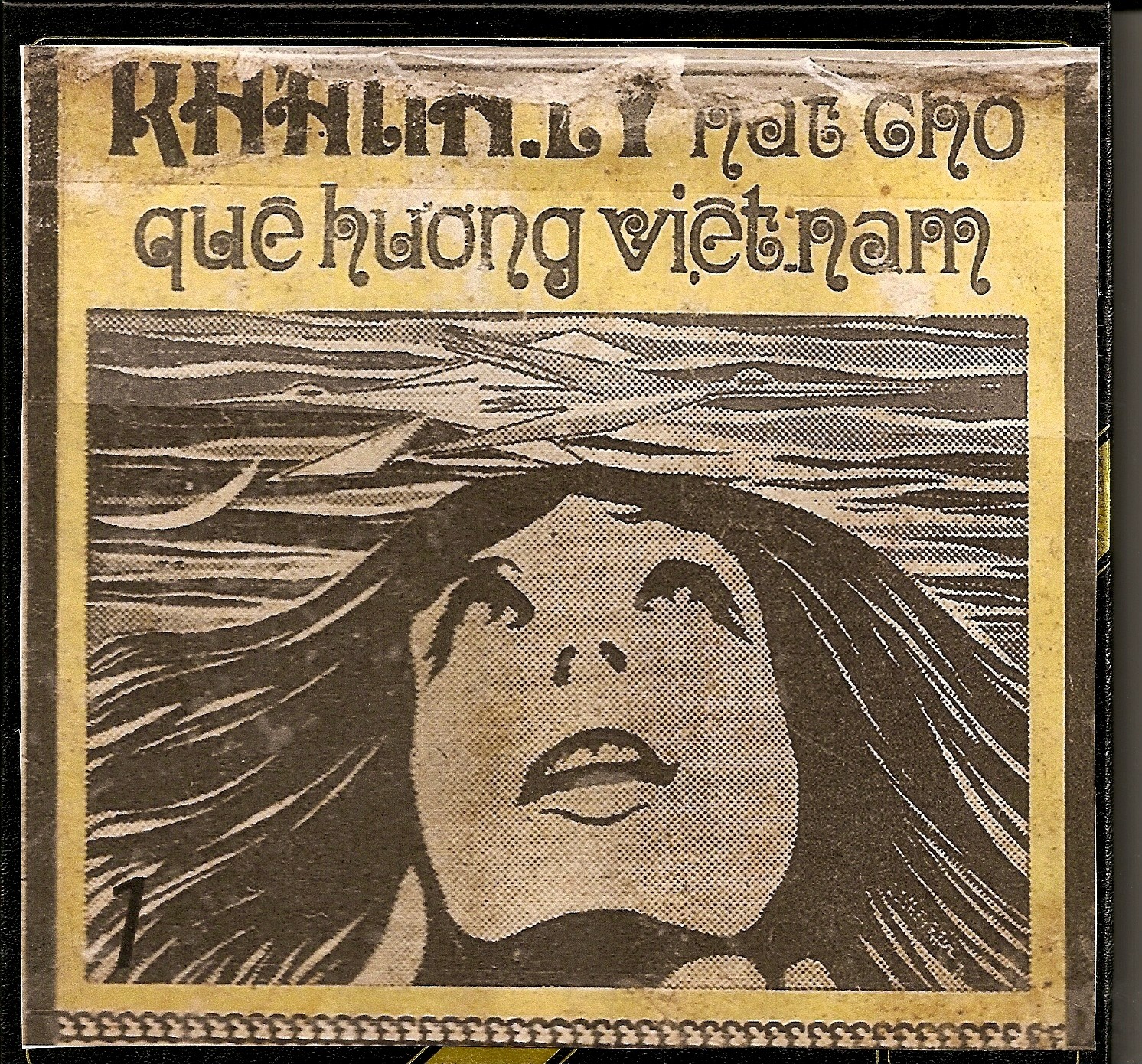
The second category is his music of Hát cho quê hương Việt Nam: Singing for the Vietnamese country (or the Vietnamese homeland). A lot of this music was inspired by the devastation of warfare in Vietnam, and many of the lyrics are clearly against this devastation. Yet I’m hesitant in labeling this music to be “antiwar,” which has been the label attached to it since the Vietnam War. In fact, I’d argue that this label is misleading because it focuses on one aspect–a very important aspect, to be sure, but only one–and leaves out one or two other aspects. In any event, the label “antiwar” has been indiscriminately used to convey elements of protest in some of the lyrics. It’s also a somewhat lazy label, reflecting a somewhat uncritical listening of his recordings or a somewhat lazy reading of his lyrics. I’d replace the antiwar label by calling it TCS’s music of nationalism. This music is, generally, much less performed or recorded today. But it may be the “easiest” to study because there is a body of scholarship about (a) nationalism and (b) different Vietnamese sides in the Vietnam conflict.
A third category would be TCS’s philosophical and quasi-religious music. It is by far the smallest category of his output under the Republic of Vietnam. Its best representatives are found in the second volume of the series Hát cho quê hương Việt Nam: e.g., Xa dấu mặt trời, Tiếng hát dạ lan, and Ru ta ngậm ngùi. Depending on which songs, there may be an overlap with his music of nationalism. In all likelihood, studying this category will require a wide grasp of the intellectual currents in South Vietnam: a subject that, happily, has gotten more attention from academics in Vietnam and the diaspora.
This post focuses on TCS’s music–or, more precisely, certain aspects of his music. But of course there are other subject matters and approaches. One example is to study his output in the context of the culture and marketplace of the Republic of Vietnam. See, for example, this chapter by Jason Gibbs: “Songs of Sympathy in Time of War: Commercial Music in the Republic of Vietnam,” in Republican Vietnam, 1963-1975: War, Society, Diaspora (Honolulu: 2023). And the article by John Schafer: “The Trịnh Công Sơn Phenomenon,” Journal of Asian Studies (2007). In addition to reading published primary and secondary sources, a researcher may need to visit Archives II in Ho Chi Minh City.
A serious and full-length biography, in Vietnamese or English, is always welcomed. But it is unlikely to happen, given various reasons about the current situation. We are very far from one. All the same, there is plenty out there for researchers and scholars to work on in order to advance the studies of TCS’s work and life.


1 Pingback